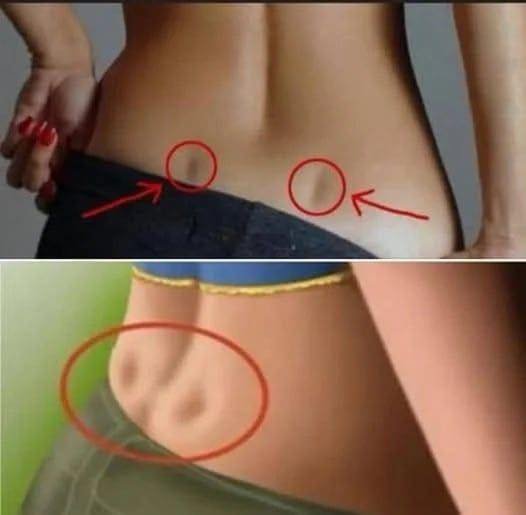
Those two subtle indentations located on the lower back, resting just above the glutes, have long been a source of fascination and aesthetic appreciation. Often referred to as Venus dimples in women and Apollo dimples in men, these features are more than just a visual quirk; they are medically known as sacral or lumbosacral dimples. They serve as a unique marker of human anatomy, occurring precisely at the junction where the pelvis and spine meet. Specifically, they indicate the position of the posterior superior iliac spine (PSIS), a point where a short ligament attaches the skin to the underlying bone, pulling it inward to create a natural, permanent dip.
For generations, it was widely believed that these dimples were a purely hereditary trait, determined solely by one’s genetic blueprint. However, modern understanding of human physiology suggests a more complex reality where environmental and lifestyle factors play a massive role in their visibility. Because these dimples are located in an area where the body naturally stores fat, their prominence is heavily influenced by a person’s body fat percentage and muscle development. While the structural foundation is genetic, the clarity of these dimples is often a reflection of physical conditioning.
High muscle tone in the erector spinae and gluteal muscles can deepen the appearance of these indentations, making them stand out as a sign of athletic health and a strong posterior chain. For those looking to emphasize this anatomical feature, targeted resistance training is the most effective approach. Since the dimples are situated at a crucial structural intersection, strengthening the surrounding muscles not only improves their definition but also enhances spinal stability and core strength. This shift in perspective highlights how these dips can be viewed as a classic mark of vitality.
A well-rounded routine to define this area should prioritize the posterior chain through exercises like back extensions, deadlifts, and glute bridges. Static and dynamic core work, such as planks and the ‘Superman’ exercise, are equally vital for engaging the stabilizing muscles of the lower spine. Ultimately, whether you call them Venus dimples or sacral indentations, these marks represent a beautiful intersection of biological heritage and physical dedication. By focusing on fitness and strength training, you can unveil these natural contours as a prominent feature of a well-conditioned physique.