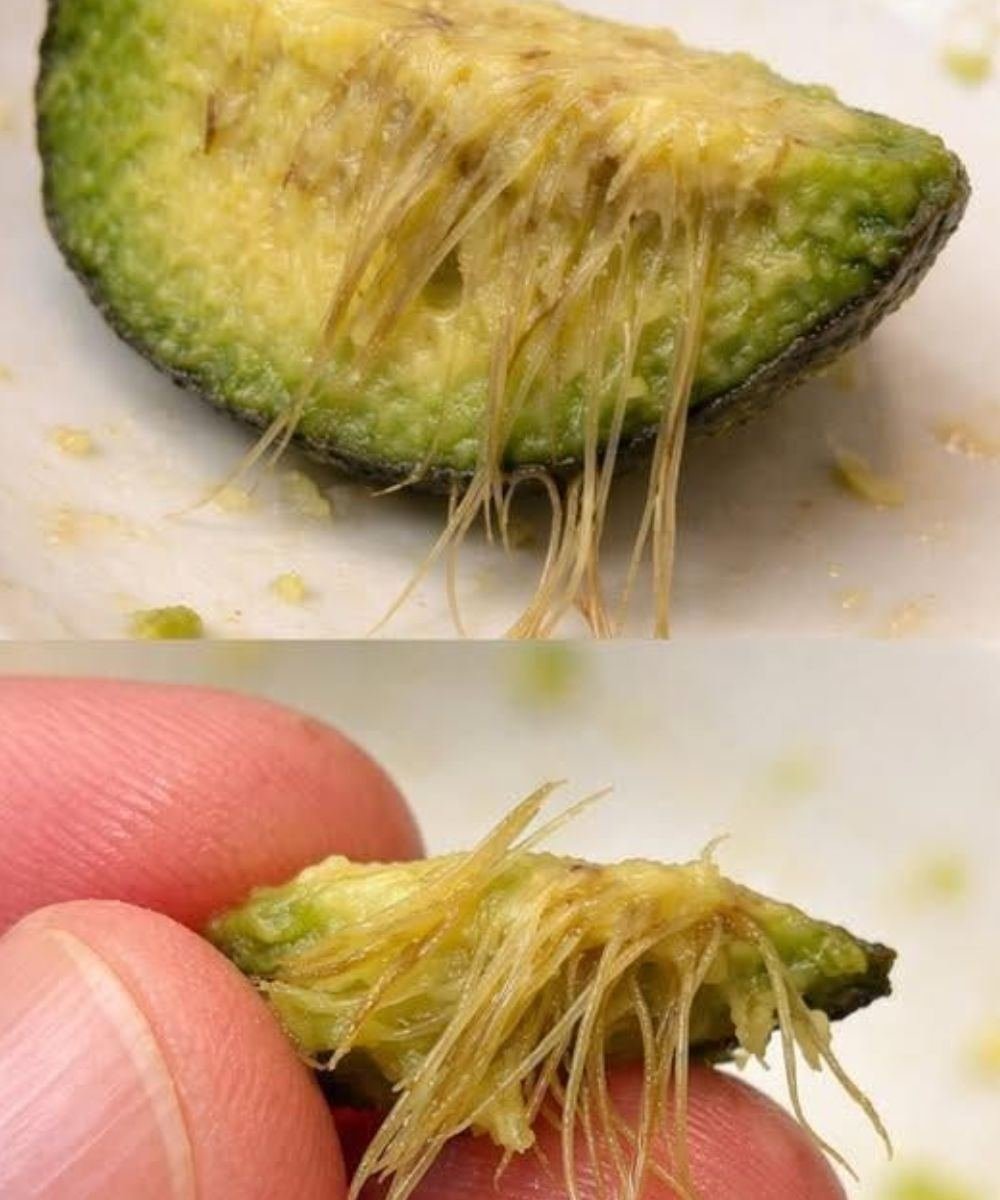
We have all experienced the ritual of the ‘avocado vigil’—that period of several days where we gently squeeze the fruit, waiting for the exact nanosecond of perfect ripeness. We envision a smooth, neon-green interior with a texture like room-temperature butter, yet all too often, the knife reveals a disappointing network of thin, brown, hair-like strings. While this discovery usually leads to an immediate sense of betrayal and a quick trip to the trash can, it is essential to understand the biological reality of what those strings actually are. They are not signs of rot or infestation, but rather a natural part of the fruit’s anatomy that serves a vital purpose.
Botanically known as the vascular system, these frustrating brown strings are the remnants of the fruit’s xylem and phloem. While the avocado is growing on the tree, these tiny channels serve as the highway for water and essential nutrients, transporting the building blocks of the fruit from the roots into the developing berry. Under perfect conditions, these bundles remain soft and virtually indistinguishable from the fatty flesh. However, when the environment is disrupted by factors like inconsistent watering or extreme temperature fluctuations, these ‘highways’ become lignified, meaning they toughen up into the woody, fibrous threads that often plague our morning toast.
The age of the tree and the specific variety of the fruit also play significant roles in how many fibers you encounter. Younger trees are notorious for producing fruit with more pronounced vascular systems, which typically smooth out as the tree matures and its internal processes become more efficient. Additionally, environmental stress such as drought followed by heavy rain can cause the vascular bundles to harden as they work overtime to distribute resources. Despite their unappealing appearance and chewy texture, these fibers are entirely safe to eat; they consist of cellulose and lignin, the same non-toxic compounds found in celery.
If you find yourself with a stringy avocado that is otherwise fresh, there is no need to discard it. These imperfect fruits are ideal for recipes where texture can be masked or altered, such as chunky guacamole or blended smoothies where a food processor can pulverize the fibers. To avoid this frustration in the future, look for avocados that feel heavy for their size and have uniform skin without soft divots. By ripening them at room temperature away from direct sunlight and moving them to the fridge at their peak, you can minimize the chances of the vascular system browning before you have a chance to enjoy your meal.