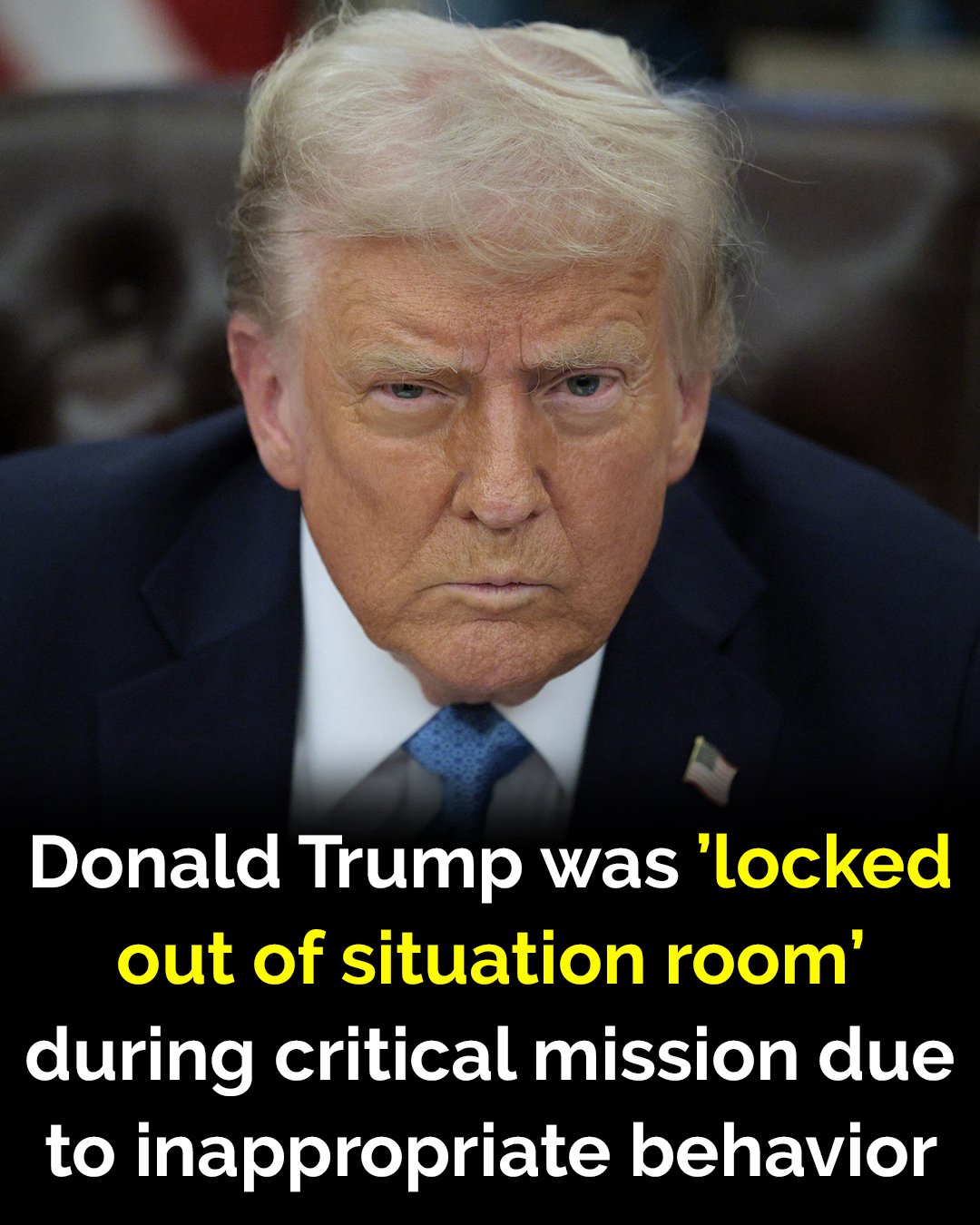
In a stunning breach of standard executive protocol, reports have surfaced regarding the alleged banishment of Donald Trump from the White House Situation Room during a high-stakes military crisis in April 2026. The incident began when an F-15E Strike Eagle crashed in hostile Iranian territory, sparking a frantic search-and-rescue operation for a missing American pilot. As global tensions reached a breaking point, the atmosphere within the West Wing reportedly shifted from clinical precision to explosive volatility, leading to an unprecedented divide between the Commander-in-Chief and his senior advisors.
According to internal sources and reports from the Wall Street Journal, the President’s reaction to the downed aircraft was marked by intense anger and a preoccupation with historical failures, specifically the 1979 Iran hostage crisis. Fearing that Trump’s temperament and constant tirades would disrupt the flow of critical intelligence, senior aides—including Vice President JD Vance and Chief of Staff Susie Wiles—reportedly made the calculated decision to keep the President outside the nerve center of the operation. Instead of receiving live updates, the President was allegedly briefed via phone at specific intervals, effectively filtering the chaotic data of the mission before it reached the Oval Office.
Despite the reported dysfunction within the halls of power, the professional execution of the rescue mission remained flawless. Utilizing advanced intelligence capabilities provided by the CIA, U.S. Special Operations forces successfully located and extracted the missing airman on April 4, 2026. The tactical success stood in sharp contrast to the internal struggle for control, highlighting a significant rift between military leadership and the executive branch. While the White House officially denied any forced exclusion, characterizing the event as a standard distribution of duties, the procedural anomalies have raised serious questions about the stability of the chain of command.
The aftermath of the rescue has done little to soothe the friction, as Trump continues to employ aggressive rhetoric, warning of ‘widespread destruction’ if negotiations with Iran fail. This episode serves as a haunting reminder of the internal distrust that can plague a presidency during moments of global instability. If the individuals closest to the President truly felt his presence was a liability during a life-or-death mission, the ‘locked door’ of the Situation Room may become the defining image of a leadership style that frequently challenges the rules of traditional governance.