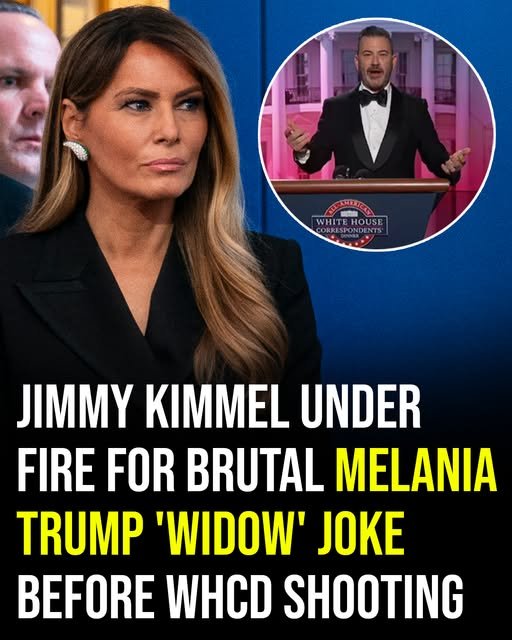
The American media landscape is currently reeling as late-night host Jimmy Kimmel faces a massive wave of public condemnation. Following a monologue that featured a controversial jab directed at Melania Trump, Kimmel has become the focus of a heated debate regarding the ethics of modern political satire. The joke, which characterized the former First Lady through the lens of potential widowhood, was initially delivered as standard late-night humor but quickly took on a darker significance following a violent security breach at the Washington Hilton.
Just days after the monologue aired, the nation watched in shock as security teams were forced to evacuate Donald and Melania Trump amidst gunfire at the 2026 White House Correspondents’ Dinner. In the immediate aftermath of this harrowing assassination attempt, the public’s perception of Kimmel’s “widow” comment shifted from entertainment to what many describe as a prophetic and dangerous incitement. The rapid transition from a televised soundstage to a bloody crime scene has left the entertainment industry struggling to justify the increasingly sharp rhetoric used against political figures.
Critics and conservative commentators have been vocal in their disapproval, arguing that such jokes contribute to a toxic media environment that dehumanizes targets. By framing a spouse in terms of her husband’s potential death, many believe the media has crossed a line from fair critique into the normalization of political violence. For those who witnessed the chaos at the Hilton—a location already scarred by the 1981 attempt on Ronald Reagan—the imagery of the night served as a stark, visceral contrast to the comfortable, air-conditioned world of Hollywood satire.
This incident represents a significant tipping point for the future of late-night television and political discourse. As investigators look into the motives behind the attack, the public is left questioning the responsibility of the cultural elite in maintaining national stability. There is a growing demand for a shift toward more respectful dialogue that acknowledges the humanity of political figures, regardless of their affiliations. The laughter that once defined late-night programs is being replaced by a sober realization that in an era of heightened volatility, words carry the weight of real-world consequences.