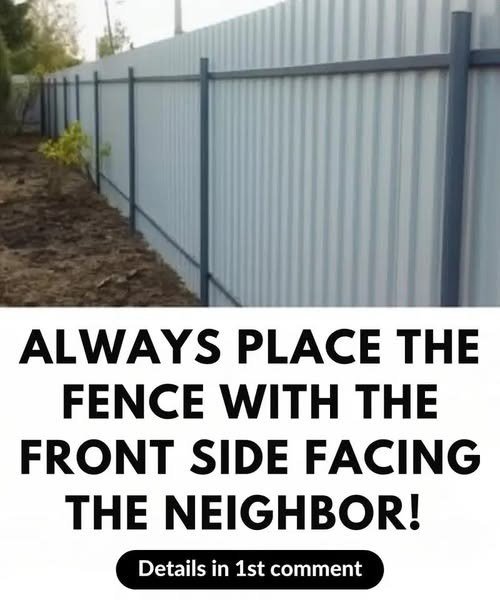
When homeowners install a fence, they often focus on privacy and security while overlooking a critical rule of residential etiquette: the finished, or “good,” side must always face your neighbor. While you may be the one paying for the materials and labor, placing the structural rails and posts toward your neighbor is an aesthetic and social landmine. This orientation error creates a polished look for the owner but leaves the neighbor staring at the “ugly” skeletal frame, setting the stage for long-term resentment and avoidable conflict.
Beyond the physical barrier, a fence serves as a signal of respect within a community. By presenting the finished side to those next door, you acknowledge that their view is as valuable as your own. Conversely, forcing neighbors to look at an industrial-looking frame can feel like a deliberate act of thoughtlessness, often turning a simple home improvement project into a decade-long cold war. Maintaining neighborly goodwill is essential for a peaceful living environment, and it starts with understanding how your property affects those around you.
The stakes are even higher when considering local laws and Homeowners Association (HOA) regulations. Many municipalities have “Good Neighbor” ordinances that explicitly mandate the finished side of a perimeter fence face outward toward the public or adjacent properties. Ignoring these rules can lead to heavy fines or legal orders to demolish and rebuild the entire structure at your own expense. Furthermore, a “backwards” fence significantly hurts curb appeal, signaling poor maintenance to potential buyers and dragging down the property value of the entire block.
To avoid these pitfalls, savvy homeowners are increasingly turning to modern solutions like “Double-Sided” or “Shadowbox” fences. These designs look identical from both sides, ensuring that everyone enjoys a finished appearance without the stress of legal disputes or social friction. Ultimately, a fence should be a bridge to a better relationship with your community rather than a wall that shuts them out. By doing your research and following local codes, you protect your investment and ensure your backyard remains a sanctuary rather than a legal nightmare.