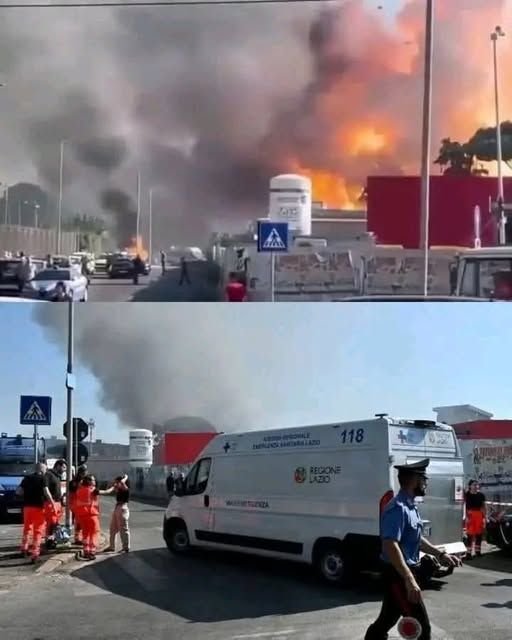
What began as a typical weekday morning on the Iztapalapa–Chalco highway, one of Mexico City’s busiest commuter arteries, transformed into a scene of unimaginable horror in a matter of seconds. An LPG tanker carrying over 13,000 gallons of liquefied petroleum gas lost control and overturned, instantly igniting a massive explosion. A towering fireball ripped through the air, sending thick, black smoke miles into the sky and creating a shockwave that shattered windows in nearby buildings, turning a routine traffic jam into a desperate struggle for survival.
The chaos that followed was a test of raw human instinct. As the intense heat became unbearable, drivers were forced to abandon their vehicles and flee on foot through a corridor of fire. While panic spread and visibility dropped to near zero, witnesses described scenes of both terror and heroism; despite the constant threat of secondary explosions, some individuals ran toward the wreckage to pull strangers from burning cars. Emergency responders and specialized hazardous materials teams soon arrived to face an inferno that refused to yield, working tirelessly to contain the volatile fuel while paramedics triaged the growing number of victims along the roadside.
The physical and human toll of the disaster is staggering, with reports confirming at least 15 fatalities and more than 70 injuries. Many victims suffered severe burns requiring long-term intensive care, quickly overwhelming the burn units in eastern Mexico City hospitals. Beyond the loss of life, the explosion reduced over 30 vehicles to unrecognizable metal shells and caused significant structural damage to surrounding homes and businesses. For the residents who felt their houses shake like an earthquake, the psychological scars of the fire and chaos are expected to remain long after the highway surface is repaired.
As authorities launch a full investigation into the cause—ranging from mechanical failure to driver error—the tragedy has reignited a fierce debate over regulatory oversight and public safety. Preliminary findings suggest the tanker may have been operating without proper permits or adequate insurance, prompting public outrage and urgent calls for stricter enforcement of hazardous material transport. While the community gathers for candlelight vigils to honor the lost, the focus remains on ensuring that such a catastrophic transition from ‘normal’ to ‘disaster’ is never repeated through systemic changes in urban cargo routing.