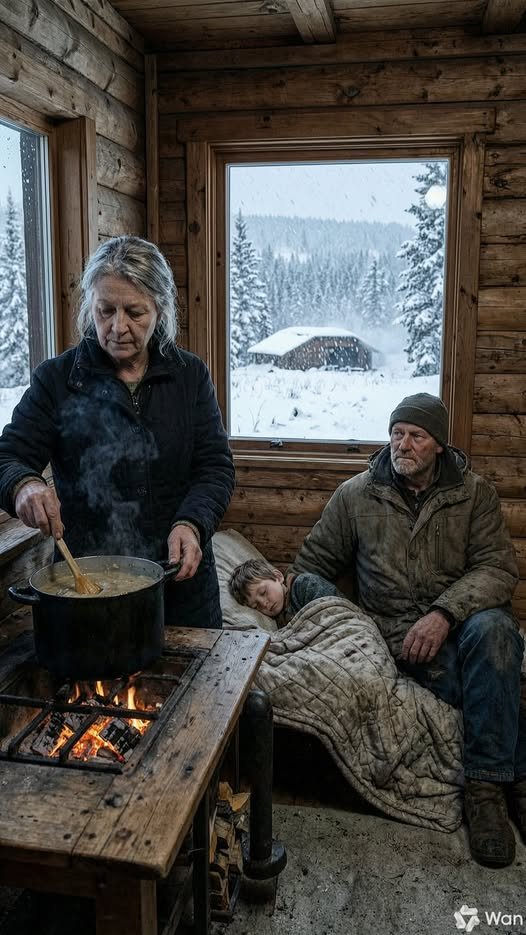
Eleanor’s life was defined by the iron-clad rule of solitude, a fortress she built to avoid the disappointments of the world. High on a frost-bitten ridge, her cedar cabin served as a sanctuary for her silence until Sam and young Cal appeared at her door. With a lame horse and a winter storm closing in, Eleanor reluctantly offered them a mere forty-eight hours of shelter, intending to cast them back into the white void as soon as the deadline passed.
The tension began to dissipate over a humble meal of fried potatoes and hardtack. While Sam moved with the wary precision of a man used to hardship, Cal brought a vibrant, chaotic energy that the cabin hadn’t seen in years. Recognizing a shared pride in Sam, Eleanor offered an extension of their stay: labor in exchange for safety. As Sam worked to mend the physical fences of the property, Cal set about dismantling the emotional barriers Eleanor had spent years constructing.
The turning point arrived with a disarmingly simple question from Cal that cut through Eleanor’s gruff exterior. When the boy asked about her marriage, Eleanor was forced to confront the ghosts of her past, revealing a truth that was as blunt as it was painful. The revelation that they were all “experts in missing people” created an unexpected bridge between the bitter recluse, the stoic drifter, and the lonely child, turning their shared grief into a foundation for connection.
As the forty-eight-hour deadline loomed, the atmosphere in the cabin shifted from one of temporary tolerance to a sense of belonging. Eleanor realized that the most vital repairs weren’t the ones being made to her fences or barn doors, but the ones happening within herself. In the biting cold of the wilderness, three broken pieces of different puzzles finally began to fit together, proving that even the most frozen hearts can find warmth in the presence of those who understand their loss.