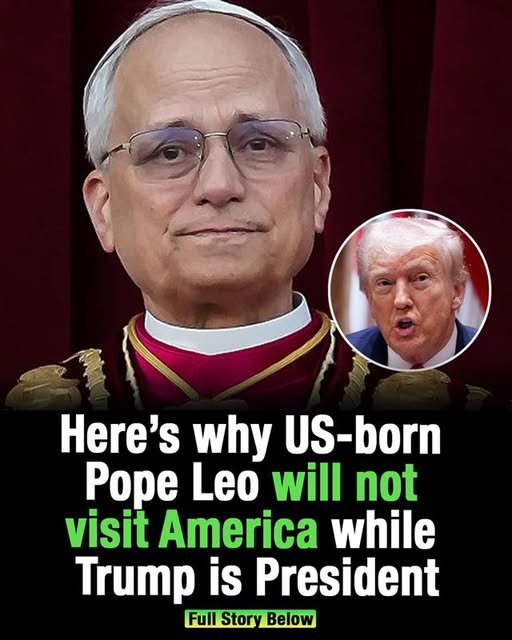
The election of Pope Leo XIV, the first American to lead the Catholic Church, was initially viewed as the dawn of a new era of transatlantic cooperation. Washington D.C. anticipated a seamless alignment between the Holy See and the United States government, assuming shared nationality would bridge the gap between religion and statecraft. However, instead of a diplomatic honeymoon, a palpable tension has emerged, characterized by a deliberate and calculated distance. This friction is not defined by open hostility but by a profound silence that has left political analysts and seasoned diplomats scrambling to decode the Vatican’s increasingly independent and detached stance.
At the heart of this growing divide is a fundamental clash between two distinct systems of values and priorities. While the United States remains focused on traditional metrics of statecraft—national security, border reinforcement, and economic preservation—Pope Leo XIV has pivoted the Church’s focus toward radical compassion and the needs of the marginalized. By prioritizing the plight of migrants, refugees, and those living in active conflict zones, the Pope has created a clear moral chasm. This shift signals that his leadership is measured by proximity to human suffering rather than proximity to the centers of traditional political power.
Perhaps the most significant indicator of this rift is the conspicuous absence of a papal visit to American soil. In the high-stakes world of international relations, timing and presence are everything, and a Pope avoiding his own home country carries immense symbolic weight. This sustained absence is interpreted by many as a silent protest against current administrative policies and a firm demonstration of the Vatican’s refusal to be used as a political tool. The reality is that in the intricate world of global diplomacy, what is purposefully left undone often speaks much louder than any public statement or signed treaty.
Ultimately, the relationship between Washington and the Vatican has entered a phase of disciplined restraint. While diplomatic channels remain open, the lack of visible warmth highlights a stark reality: political authority and moral authority do not always walk hand-in-hand. Pope Leo XIV’s resolve to stay focused on the neglected edges of the world serves as a powerful reminder that global influence is not always synonymous with political alignment. His quiet, immovable stance is reshaping the future of global relations, proving that true leadership sometimes requires standing apart from the structures one was expected to embrace.