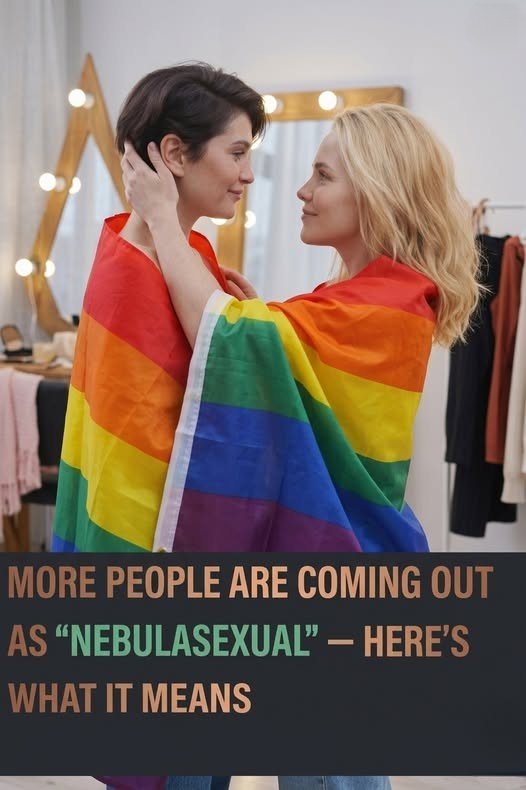
As our collective understanding of human identity continues to evolve, new terms are emerging to describe complex personal experiences that traditional labels fail to capture. One such term gaining traction is nebulasexual, a unique identity closely connected to neurodivergence. For many individuals—particularly those with ADHD, autism spectrum disorder, or OCD—existing categories of sexual and romantic orientation do not accurately reflect how they process attraction. This disconnect has driven a search for new language that validates the complex ways different brains experience deep personal connections.
The term is inspired by the cosmic “nebula,” representing a cloudy or unclear expanse in space. This metaphor perfectly reflects the difficulty some neurodivergent people face when distinguishing between different types of attraction, such as sexual, romantic, or aesthetic. Because neurological variations can blur these lines, attraction often feels like a misty, ill-defined nebula rather than a distinct, black-and-white category. Falling under the broader quoisexual umbrella, this identity acknowledges that for some, desire is not a simple choice but a complex psychological state.
Understanding nebulasexuality requires looking beyond the standard frameworks of desire. It is not framed as a temporary phase of confusion, but as an ongoing state where a person may desire deep emotional intimacy while remaining unable to categorize their sexual feelings. Many individuals report feeling a profound sense of neutrality regarding physical intimacy, even when they deeply value companionship. This highlights the significant difference between sexual attraction and the desire for emotional connection, proving that the two do not always align as societal norms often dictate.
While the label has provided immense validation for many in the neurodivergent community, it has also faced skepticism from critics who question the necessity of such specific terminology. However, advocates argue that giving a name to these experiences reduces feelings of isolation and helps individuals communicate their boundaries more effectively. By embracing these nuanced expressions of attraction, society moves closer to a more inclusive future where the diversity of the human brain is respected and every individual feels seen and heard.