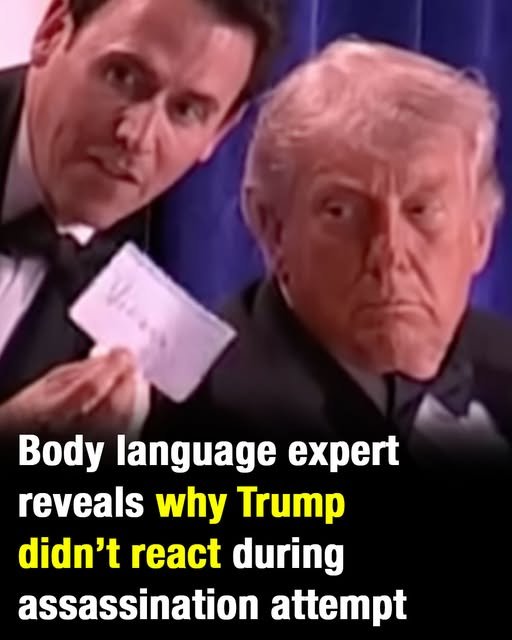
During the usually high-spirited White House Correspondents’ Dinner, a sudden security breach involving a suspect identified as Cole Tomas Allen sparked immediate panic among the elite attendees. While guests scrambled and sought cover as gunfire allegedly erupted, the world was transfixed by Donald Trump’s seemingly frozen demeanor amidst the chaos. This specific stillness has since become a focal point for intense digital debate, leading psychological experts to analyze whether his lack of reaction was a sign of supernatural composure or a documented biological response to extreme stress.
Body language analyst “Dr. G” suggests that Trump’s behavior is deeply rooted in the “freeze” response, one of the three core pillars of human survival alongside fight and flight. This evolutionary pause allows the brain to process overwhelming sensory data and categorize a threat before the body takes physical action. In high-pressure situations, the amygdala momentarily halts movement to determine the exact nature of the danger, a reaction seen in several other guests who were caught in the split-second decision between processing and reacting.
Beyond internal biology, professional conditioning likely played a significant role in the former president’s response during the crisis. Heads of state are specifically trained to follow the cues of their elite protective details rather than acting on independent impulse, which could lead to greater danger. By remaining still, Trump may have been instinctively awaiting the intervention of Secret Service agents, whose protocols dictate they form a human shield and guide the official to safety, preventing them from accidentally moving into the line of fire.
While critics and supporters interpret his lack of movement through their own political lenses, the incident serves as a grim reminder of the volatility of modern political gatherings. Ultimately, the survival of those in attendance was a testament to the rapid response of security forces on site. The ongoing debate over body language serves as a reminder of how the public seeks to decode the internal states of leaders during moments of extreme uncertainty, turning a brief second of survival instinct into a masterclass in psychological interpretation.